Testing Your Tap Water: the Free Report and the Lab Test
The two ways to find out what is in your tap water: the annual report your water supplier already publishes, and a sample from your own tap analysed by a certified laboratory. What each one covers, what the units and limits mean, and which one answers your question.
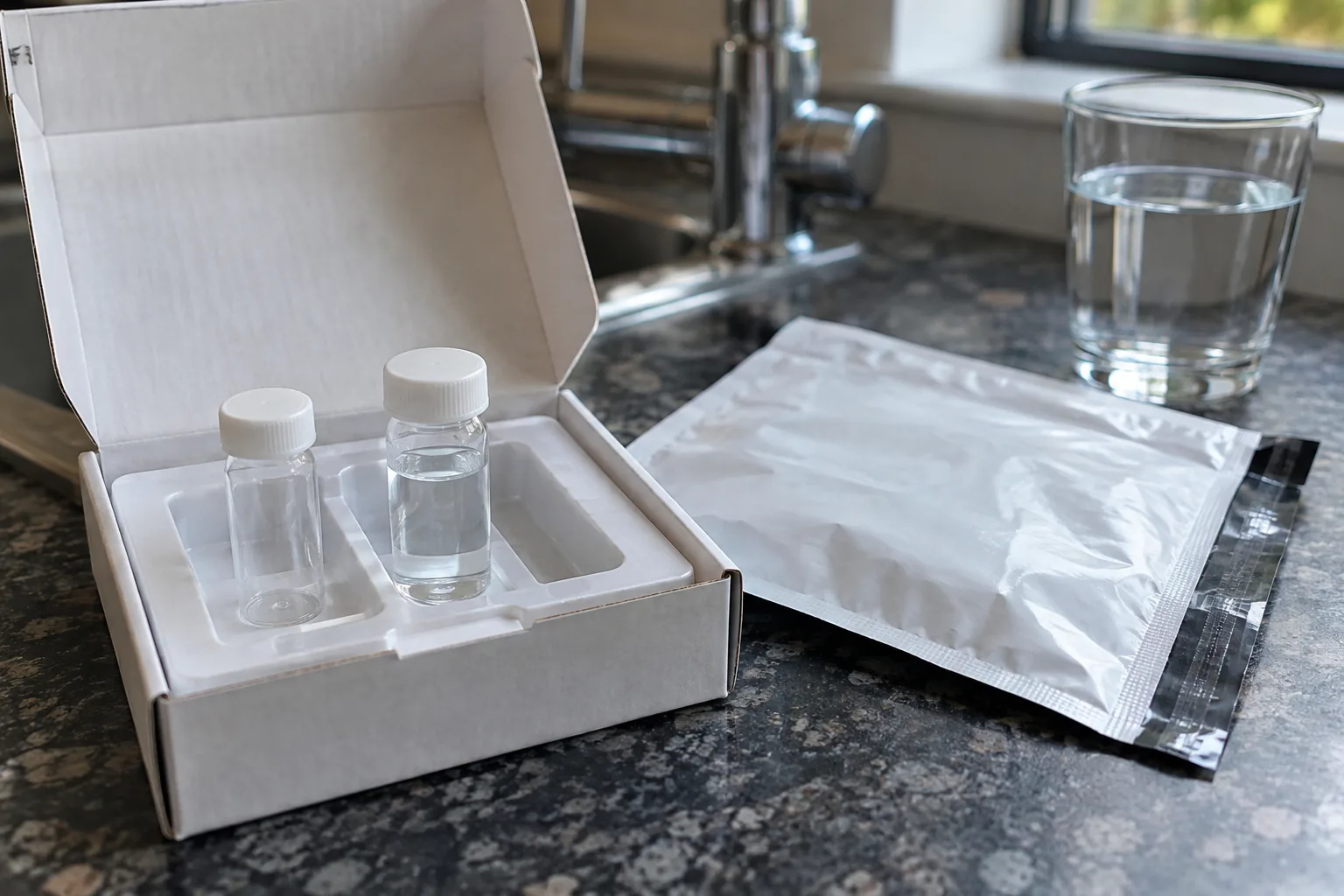
Read the free annual report for your area first, then pay for a tap test only if you need to know what your own pipes add after the mains.
✓ 5-Second Summary & Core Facts
- Your water supplier's annual report describes the mains water for your area, not the water after it has travelled through your own plumbing.
- Milligrams per litre (mg/L) is parts per million and micrograms per litre is parts per billion, so 0.010 mg/L and 10 parts per billion are the same number.
- The EPA's Maximum Contaminant Level is the legal limit; the lead and copper action levels are the point at which a water system has to take extra steps.
- The EPA says lead usually comes from service lines, solder and brass fittings, which is why only a tap sample can answer that question.
- A detected amount is not the same as an amount over the limit, and most reports list the two side by side.
There are two ways to find out what is in the water coming out of your tap, and they answer different questions. The company that supplies your area already tests the mains water and publishes the results, usually once a year and free to you — but only a sample taken from your own kitchen tap and analysed by a certified laboratory can tell you what your own pipes add in the last few metres.
So the practical answer to should you test your water is: read the report first, because it is free and the work is already done, then decide whether a tap test would tell you something the report cannot.
The report your supplier already publishes
In the United States, the Environmental Protection Agency (EPA) requires community water systems to give their customers an annual drinking water quality report, also called a Consumer Confidence Report. The EPA describes it as a report that tells you which contaminants were found in your drinking water, at what levels, and how those levels compare with the limits set in the rules. If you are not in the US, the equivalent is whatever your own water company publishes for your postcode, and it is worth asking them for the results for your supply zone rather than settling for a national summary.
It is a dull document and it is the most useful thing you will read on this subject, because every number in it came from a real sample rather than from someone's guess about your area.
How to read the numbers
Two units do most of the work. Milligrams per litre (mg/L) is the same as parts per million. Micrograms per litre is the same as parts per billion. There are a thousand micrograms in a milligram, so 0.010 mg/L and 10 parts per billion are the same amount written two different ways — which is easily the most confusing thing on a water report.
Then there are the limits. The EPA's National Primary Drinking Water Regulations set a Maximum Contaminant Level, usually shortened to MCL, for each regulated substance: the highest amount allowed in the water delivered to customers. The EPA's MCL for arsenic is 0.010 mg/L, which is 10 parts per billion. Its MCL for nitrate is 10 mg/L, measured as nitrogen.
A few substances work differently. For lead and copper, the EPA sets an action level instead: 15 parts per billion for lead and 1.3 mg/L for copper. An action level is not a pass or fail line for your individual glass. It is the point at which the water system has to take extra steps, such as treating the water so that it is less likely to dissolve metal out of the pipes it travels through.
One habit worth building: detected and over the limit are not the same sentence. Most reports print the detected amount right next to the limit, and most detected amounts sit well below it. Read the pair of numbers, never the single word.
What the report cannot tell you
The report describes the water in the mains. It cannot describe your house, and the clearest example is lead. The EPA says lead gets into drinking water mainly when plumbing materials containing lead corrode, and that the most common sources are the lead service line joining the main to the property, along with lead solder and brass fittings inside it. Water can leave the treatment works with no lead in it and pick some up on the way to your kitchen.
The EPA also points out that you cannot see, taste or smell lead in water. That is the whole reason a test exists for it. Where it comes from and what the limits are is covered in more detail in our article on lead in tap water.
Testing a sample from your own tap
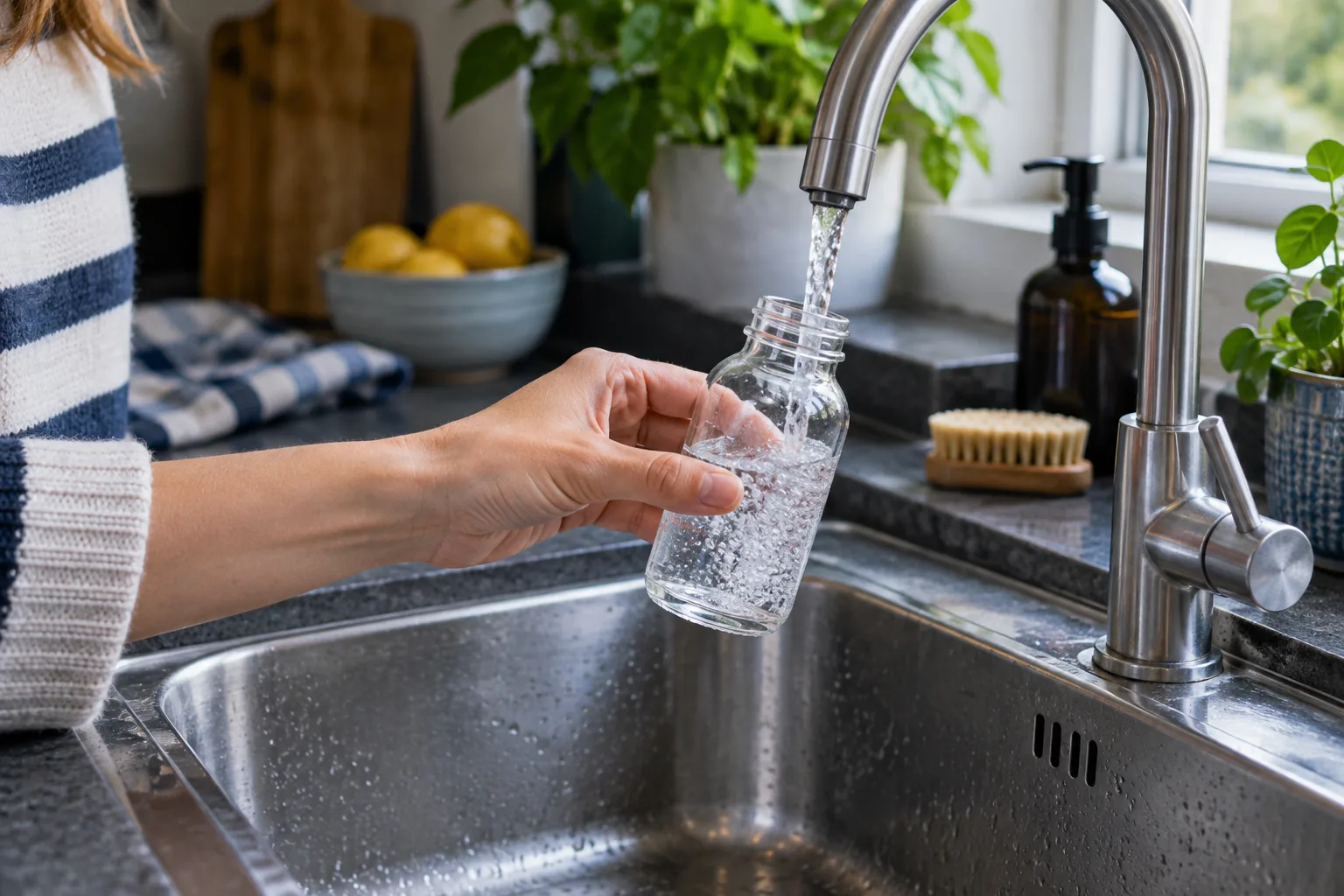
If you want a number about your house rather than your area, it has to come from water you collected, analysed by a laboratory. The EPA's advice for anyone concerned about lead is to contact your water supplier, who may test your tap water for you or point you to laboratories that are certified to do it. Certified means the laboratory has been approved to run drinking water tests to a set method — the same kind of laboratory behind the numbers in the annual report.
Home dip strips are the other thing you will see. A colour-change strip is better treated as a hint than as a measurement: it can suggest your water is hard, but it will not give you a figure you could take to your supplier or a plumber. If a strip shows something you were not expecting, that is the moment to pay for a laboratory test, not the moment to buy equipment.
Deciding what to ask for
Laboratory tests are priced by group, so test for everything is not really on the menu. Three things narrow it down:
- Where your water comes from. The EPA's drinking water rules apply to public water systems. A private well is not one, so no annual report is produced for it and any testing is the owner's to arrange.
- What your plumbing is made of. Since the EPA names service lines, solder and fittings as the usual route for lead, the age of the pipework between the street and your kitchen matters more than the age of the treatment works.
- What the report already flagged. If something in your zone was detected close to its limit, that is the specific thing to ask a laboratory about, rather than a general panel.
Limits are not the same everywhere
The World Health Organization (WHO) publishes its Guidelines for drinking-water quality, which WHO describes as the basis used for regulation and standard setting around the world. Countries then set their own legal numbers from that starting point, which is why a figure you read online can be correct and still not be the figure that applies where you live. Whenever you see a limit quoted, check which body set it and for which country.
Taste, limescale and cloudiness are a separate question
A chalky taste, a film on the kettle or spots on glassware are about dissolved minerals, and they are not the same subject as the contaminant limits above. What those minerals are and what they do in a house is covered in our article on hard and soft water. It is worth separating the two in your head before you spend anything, because the test that answers one will not answer the other.
What to do with the result
A result is useful because it names what a treatment step would actually have to remove, and different mechanisms remove different things: a physical barrier works by pore size, while carbon works by holding certain molecules onto its surface. Knowing your number first is what stops you buying a mechanism aimed at something your water does not contain. And if it is PFAS you have been wondering about — per- and polyfluoroalkyl substances, a family of manufactured chemicals — start with our article on what they are, because they are their own question with their own testing.
The order that saves the most money is the same every time: read the free report for your area, ask your supplier what they will test at your tap, pay a certified laboratory for the one or two things that are genuinely about your house, and only then think about treatment.
Sources
Every figure in this guide traces to one of the documents below.
- US Environmental Protection Agency Consumer Confidence Reports (CCR) epa.gov Government / academic
- US Environmental Protection Agency National Primary Drinking Water Regulations epa.gov Government / academic
- US Environmental Protection Agency Basic Information about Lead in Drinking Water epa.gov Government / academic
- World Health Organization Drinking-water who.int Government / academic