Lead in Tap Water: Where It Comes From and What the Limits Are
Lead in drinking water comes from the pipes and fittings between the water main and your tap, not from the source or the treatment works. This explains how it gets in, what limits regulators have set, why boiling does nothing, and what a filter physically does to a dissolved metal.
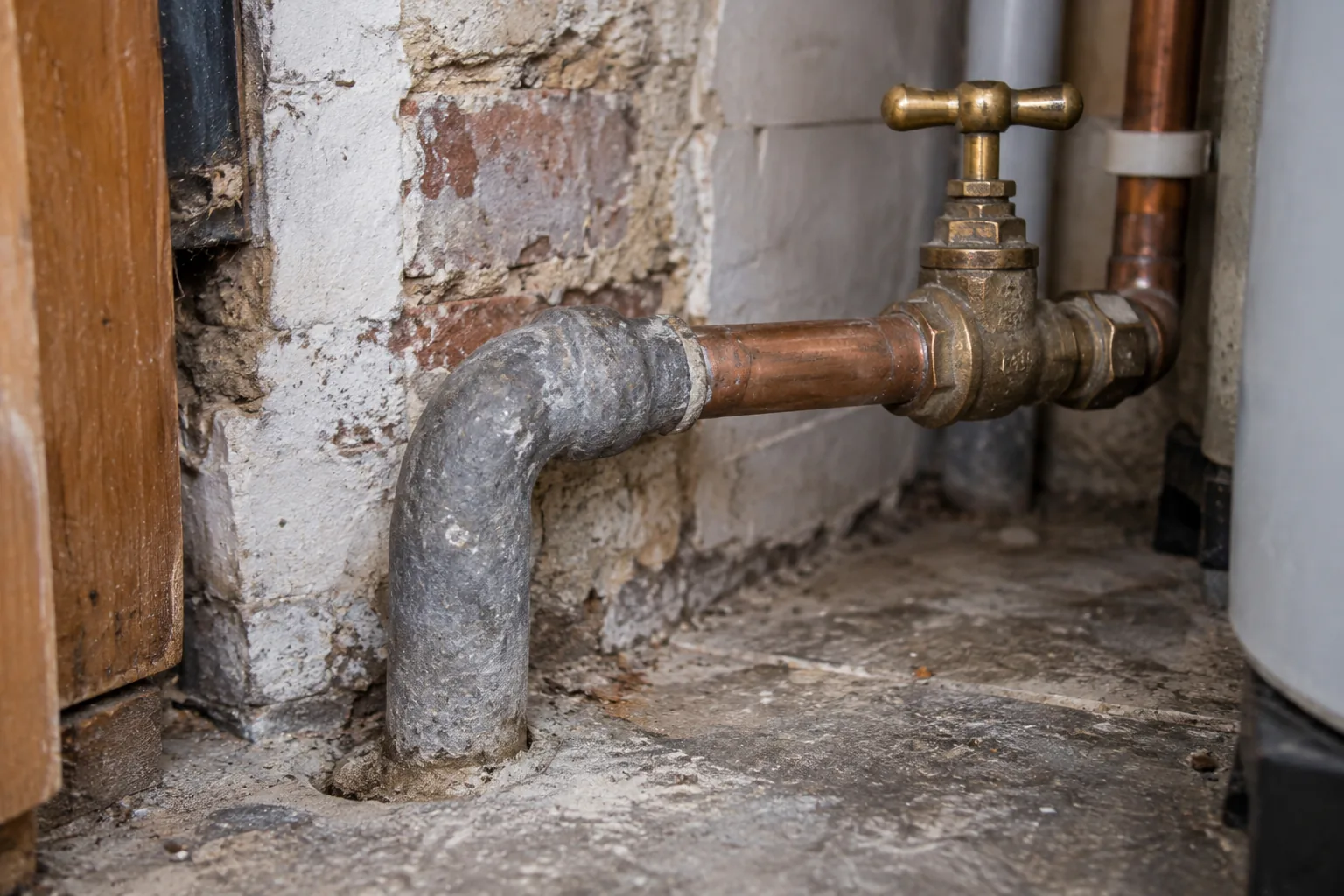
Lead is a plumbing problem rather than a supply problem, so the only answer that applies to your house is what your own pipes and fittings are made of.
✓ 5-Second Summary & Core Facts
- Lead dissolves into water from lead pipes, lead solder and brass fittings, mostly after the water has left the treatment works.
- The Water Supply (Water Quality) Regulations 2016 set the limit for lead in England and Wales at 10 micrograms per litre.
- The US Environmental Protection Agency's action level is 15 parts per billion, and its non-enforceable goal for lead is zero.
- Water that has stood still in the pipe overnight, and water from the hot tap, pick up more than water that has been running.
- Boiling does not remove lead, because the metal stays behind as steam leaves.
- Filters deal with lead by adsorption, ion exchange or a membrane — all of which depend on the water being held against the media long enough.
Lead in tap water does not come from the reservoir or the treatment works. It comes from the last stretch of pipe between the water main in the street and your kitchen tap, and from the solder, fittings and taps inside the house — which is why two homes on the same road, fed by exactly the same supply, can give completely different results.
So the useful question is not whether there is lead in the water around here. It is what the pipes at this address are made of. Here is how lead gets in, what the limits are and who set them, and what a filter physically does to a metal that is dissolved in water.
How lead gets into water that left the works clean
The US Environmental Protection Agency (EPA), the federal water regulator in America, describes lead entering drinking water mainly through corrosion: water sits in contact with lead pipes, lead solder or brass fittings, and a small amount of the metal dissolves into it. The EPA points to three things that increase how much dissolves — water that has been standing still in the pipe for hours, water that is naturally more corrosive, and higher temperatures.
That last one has a practical consequence for the way most kitchens work. Hot water draws more out of the pipework than cold, which is why the EPA's advice is to take water for drinking and cooking from the cold tap, and not to use hot tap water for anything you are going to drink.
It also means that lead is invisible at the tap. You cannot taste it, smell it or see it, and there is no cloudiness or metallic tang that reliably goes with it. That is the honest reason this subject is confusing: nothing about the glass in your hand tells you anything either way.
Finding out what your pipe is made of
The pipe running into a house usually comes in two parts: a section the water company is responsible for, and a section belonging to the property. The EPA describes service lines in exactly those terms, with a utility-owned portion and a customer-owned portion, and either of them can be lead — so replacing one and not the other leaves half the run in place.
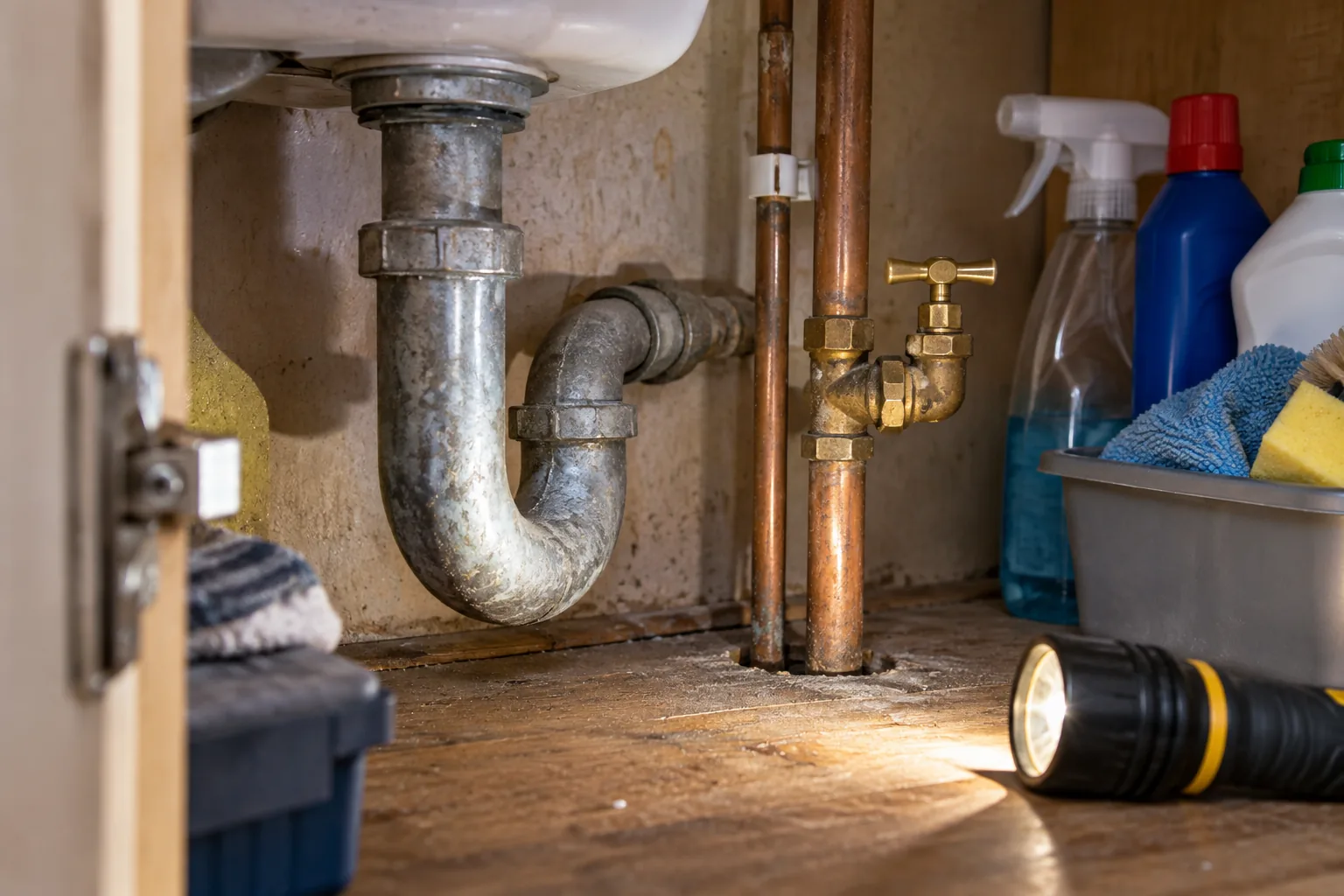
Checking the indoor end is a two-minute job. Find where the pipe comes up, usually under the kitchen sink or near the internal stop tap. Lead is a dull grey, soft enough that scraping it with a coin leaves a bright silver mark, and it is not magnetic, so a fridge magnet will not stick to it. Copper scratches to a coppery colour and plastic is obvious. The EPA sets out the same check for households in the US, and the metal behaves the same way whichever country the pipe is in.
The EPA also notes that homes built before 1986 in the US are more likely to have lead pipes, fittings and solder, because that is when the American rules on lead in plumbing changed. The date is different here, and age alone never settles it — plenty of older houses were replumbed decades ago and some newer ones still connect to an old lead communication pipe. The pipe itself is the evidence, not the build year.
The limits, and who set them
In England and Wales the limit is set by the Water Supply (Water Quality) Regulations 2016, which give a value for lead of 10 micrograms per litre. A microgram per litre is the same as one part per billion, so that is ten parts per billion — a genuinely tiny amount, and a figure that exists because laboratories can measure it, not because it is something a person could detect.
The American numbers are structured differently and are worth knowing, because a lot of filter information written for a UK audience quotes them. Under the EPA's Lead and Copper Rule the action level is 15 parts per billion. That is not a limit on your glass of water; it is a trigger for the water utility. Samples are taken from a set of higher-risk homes, drawn first thing after the water has been standing in the pipes for at least six hours, and if more than ten per cent of those samples come back above 15 parts per billion the utility has to act. Separately, the EPA's maximum contaminant level goal for lead — the non-enforceable target it works towards rather than the enforceable standard — is zero.
For context on why regulators treat it this way at all: the World Health Organization lists lead among the ten chemicals of major public health concern. That is a statement about how WHO classifies the substance, and it is the part of this you can check for yourself in a document with a name.
Why your water company's report may not answer this
Water quality reports describe the water in the supply — what leaves the treatment works and travels through the mains. Lead is the awkward exception, because on the EPA's own account it mostly enters after that point, from the plumbing between the main and the tap. A perfectly clean set of supply results is entirely compatible with lead in one specific kitchen, and that is not a flaw in the report. It is measuring a different thing from the one you are asking about.
The same logic explains the standing-water rule in the EPA's sampling method. If water has been sitting in a lead pipe all night it has had hours of contact with the metal; if the tap has been running for two minutes, most of what you are drawing has come from the main. Two samples from the same tap, taken twenty minutes apart, can honestly disagree.
Boiling does nothing
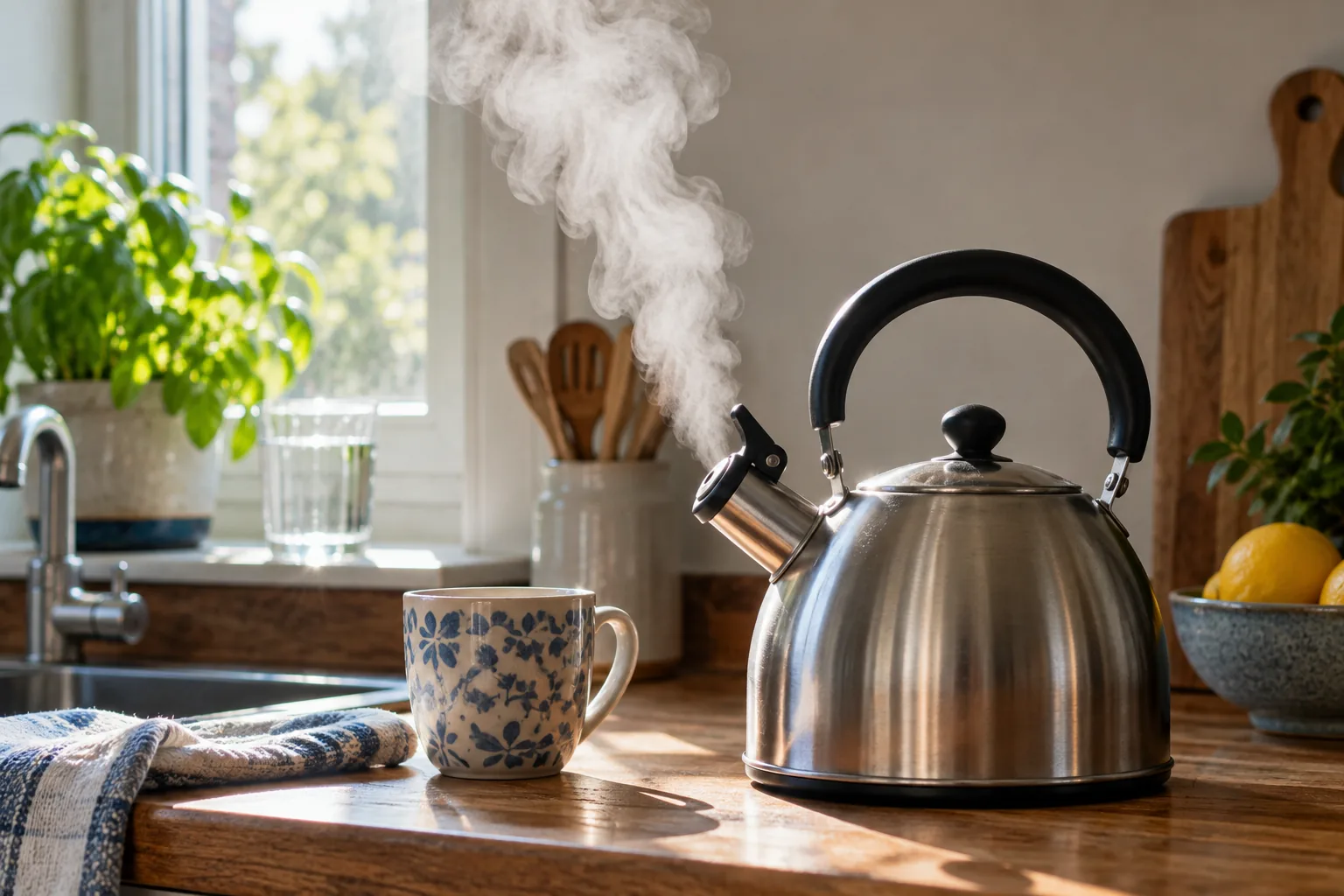
Boiling kills organisms. It does not remove lead, and the EPA says so directly. Lead is a metal dissolved in the water; when you boil the kettle, water leaves as steam and the lead stays behind in what remains, so a long boil slightly concentrates it rather than removing it. This is the same trap that catches people with other contaminants — the same thing happens with PFAS, where boiling makes the concentration worse, not better.
What a filter actually does to a dissolved metal
Lead in water is not a particle floating about that a sieve could catch. It is dissolved, at the scale of individual ions, so straining alone does nothing. There are three mechanisms that do something, and they are worth understanding as mechanisms rather than as products.
- Adsorption in a carbon block. A carbon block is activated carbon compressed into a solid cylinder rather than loose granules. Water is forced through the narrow channels between the carbon particles, and substances stick to the enormous internal surface area as they pass. Blocks made for lead usually have an extra medium blended in, because plain carbon is far better at chlorine and taste than at metals.
- Ion exchange. Resin beads carry loosely held ions — often sodium or hydrogen — on their surface. When water passes over them, the resin swaps those for metal ions it holds more tightly, and the metal stays on the bead. The bead has a finite capacity, which is the whole reason cartridges expire.
- A reverse osmosis membrane. Here mains pressure pushes water against a membrane whose pores are smaller than the dissolved ions, so water molecules cross and most of the dissolved content does not. It is the only one of the three that works by size rather than chemistry, and the micron scale explains why pore size decides what gets through.
What all three share is that they need time. The water has to be held against the medium long enough for the sticking, swapping or crossing to happen, which is why the same medium performs differently in different housings — it is contact time and pressure that separate a good result from a poor one, far more than the material named on the box.
Because performance varies that much, filters are tested against published standards rather than claims. The EPA refers households to filters certified under NSF/ANSI Standard 53 — NSF is a standards body, ANSI is the American National Standards Institute, and Standard 53 is the one that covers reduction of specific contaminants including lead. That certification is a testing fact, not a shortcut: an uncertified filter has simply not been put through it.
Where I would start
I would look under the sink before doing anything else, with a coin and a magnet, and see what the pipe actually is. Then I would ask the water company what the section they are responsible for is made of at that address, because they hold records for it and you do not. Those two answers cost nothing and between them they settle whether any of this applies to your house at all.
If it does apply, the EPA's standing-water point is the one to hold on to: water that has sat in the pipes overnight has had the longest contact with them, and running the tap first clears that stretch. It is a small thing that costs a few seconds, and it is based on how the metal gets into the water in the first place.
Sources
Every figure in this guide traces to one of the documents below.
- US Environmental Protection Agency Basic Information about Lead in Drinking Water epa.gov Government / academic
- US Environmental Protection Agency Lead and Copper Rule epa.gov Government / academic
- World Health Organization Lead poisoning who.int Government / academic
- The National Archives (legislation.gov.uk) The Water Supply (Water Quality) Regulations 2016 legislation.gov.uk Government / academic