Hard Water and Soft Water: What the Minerals Actually Do
Hardness is dissolved calcium and magnesium, picked up from rock. This explains how the measurement works, why regulators class it as a nuisance rather than a health matter, what it genuinely costs you around the house, and why it is the one thing a cheap handheld meter is actually measuring.
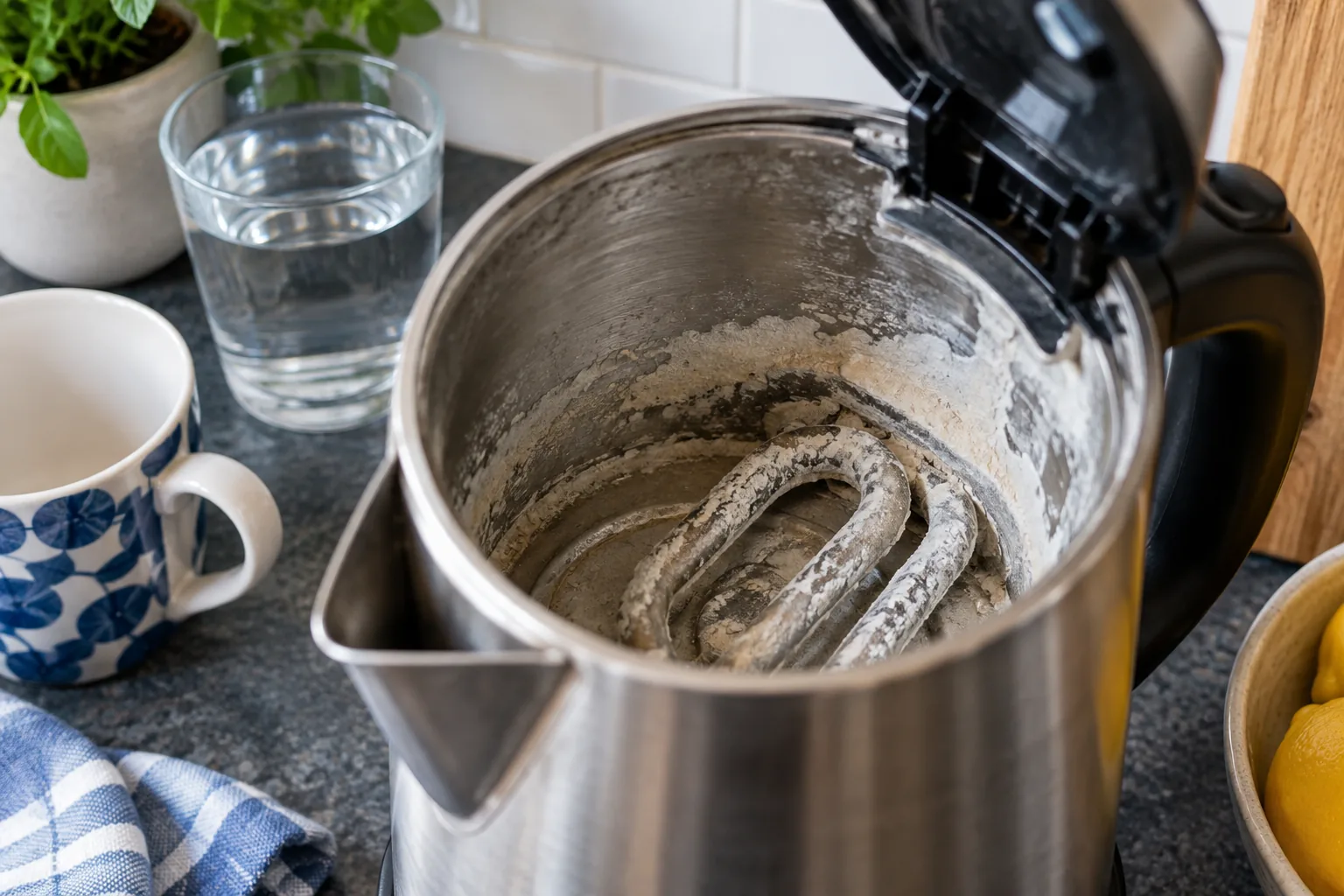
Hardness is dissolved calcium and magnesium, and both the US Environmental Protection Agency and the World Health Organization place it outside health-based limits. What it reliably affects is scale in pipes and appliances, how much detergent you need, and the taste and feel of the water.
✓ 5-Second Summary & Core Facts
- Hardness is dissolved calcium and magnesium from rock, not a contaminant.
- The EPA classes it as a secondary standard: taste, appearance, nuisance.
- Scale in heating elements and pipework is the real, measurable cost.
- Softening swaps the minerals for sodium; conditioning leaves them in.
- A handheld TDS meter is mostly reading hardness, nothing more.
Hard water is water with a lot of dissolved calcium and magnesium in it. That is the whole definition. It is not a sign of dirt, pollution or poor maintenance — it is a record of the rock the water travelled through on its way to you.
Rain arrives almost mineral-free. As it moves through ground containing limestone or chalk it dissolves calcium and magnesium out of the rock, and the more of that it passes through, the harder the water becomes. The US Geological Survey describes hardness as the amount of dissolved calcium and magnesium present, and it maps closely onto local geology. Two towns twenty miles apart can differ sharply.
How it is measured, and why the units differ
Hardness is expressed as a concentration of calcium carbonate, usually in milligrams per litre. In the United States you will also see grains per gallon, which is the same measurement in older units, and in the United Kingdom suppliers often publish a descriptive band — soft, moderately soft, slightly hard, hard, very hard — alongside a figure.
The important thing about the numbers is that they are a continuum with no threshold of safety anywhere along it. There is no point on the scale where water stops being fine to drink and starts being a problem. That is unusual: most water quality figures exist precisely because there is a limit somewhere.
Why regulators leave it alone
The US Environmental Protection Agency maintains two kinds of drinking water standard, and the difference explains a great deal of the confusion around hardness.
- Primary standards are enforceable and health-based. A public supplier must monitor these contaminants, report them, and act when a limit is exceeded.
- Secondary standards are guidance, covering taste, colour, odour and nuisance effects such as staining and scale. They are not enforced federally.
Total dissolved solids, which is largely hardness minerals in ordinary tap water, sits in the second category. The World Health Organization likewise addresses hardness under acceptability rather than under health-based guideline values.
So when your water is described as very hard, that is a statement about how it behaves in a kettle and how it tastes. It is not a statement about safety. Calcium and magnesium are minerals people consume in food every day.
Hardness is a plumbing and laundry problem wearing the costume of a health problem.
On the question of skin, the honest position is that some research has looked at associations between hardness and skin conditions, particularly in children, and that this is an area of ongoing study rather than a settled finding. It has not led any regulator to set a health-based limit for hardness, and this article is not the place to go further than the evidence does.
What hardness genuinely costs you
The effects that are well established are physical and domestic, and they add up.
- Scale. When hard water is heated, calcium carbonate comes out of solution and deposits as limescale. It forms on kettle elements, inside boilers, on heat exchangers and in pipework. Scale is a poor conductor of heat, so a scaled heating element has to work harder and longer to do the same job.
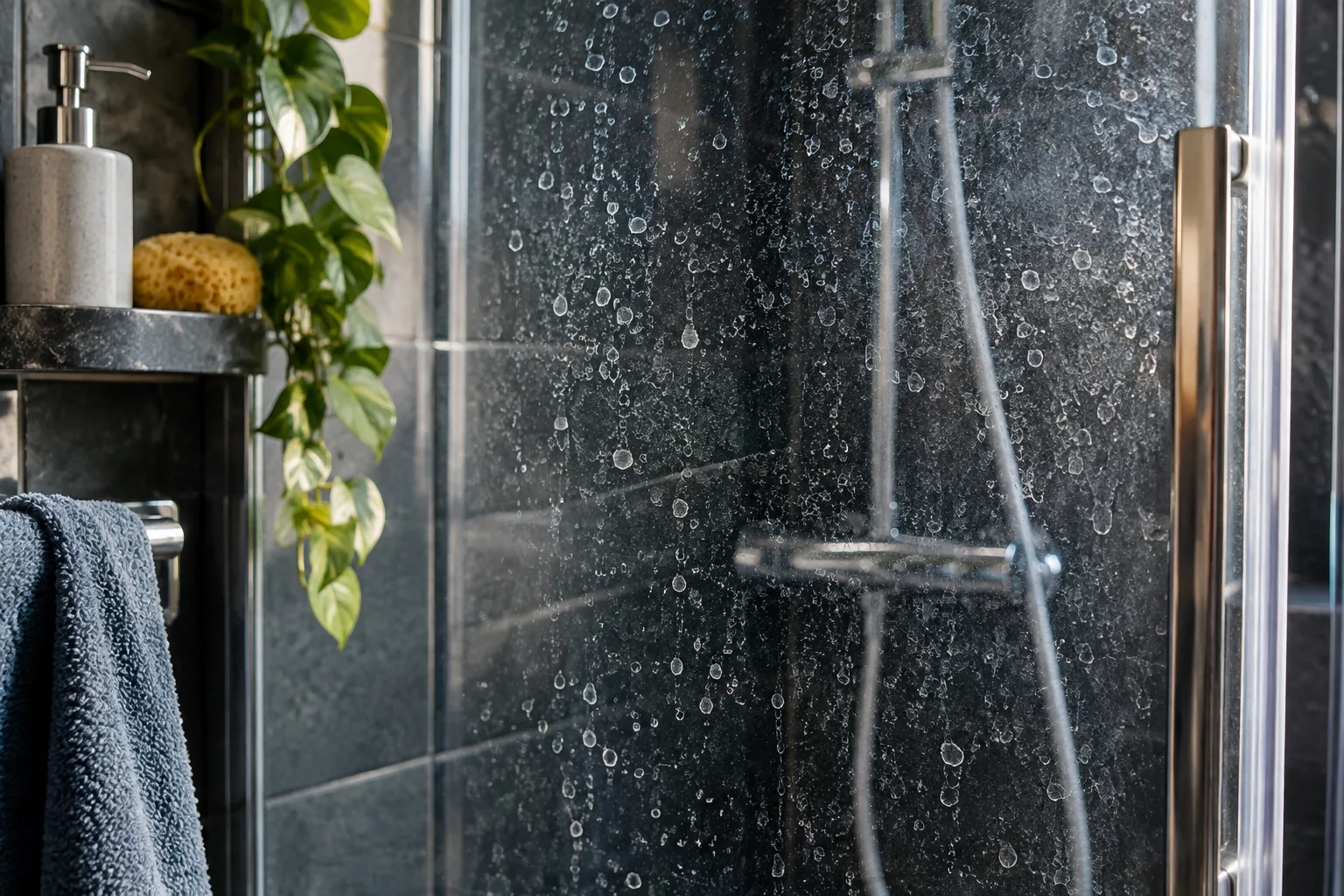
- Detergent. Hardness minerals react with soap to form an insoluble residue — the film on a shower screen and the ring in a bath. That reaction consumes soap that would otherwise be cleaning, which is why hard-water areas get through more detergent for the same result.
- Appearance. Spotting on glassware and taps, and a dulled feel to laundry.
- Taste. Some people prefer the fuller taste of hard water. Others find softened water slippery and flat. This is genuinely a preference and not a quality ranking.
Two different ways of dealing with it
They are often discussed as if interchangeable. They are not, and they do not produce the same water.
Ion exchange softening removes the minerals. Water passes through a resin bed that swaps calcium and magnesium ions for sodium ions. The hardness is genuinely gone, the water no longer scales, and soap lathers readily. The trade-offs are real: the sodium content rises, the unit needs salt and periodically flushes brine to drain, and softened water is often plumbed to bypass the kitchen tap so that drinking water keeps its minerals.
Conditioning leaves the minerals in the water but alters how they behave, encouraging calcium carbonate to form microscopic crystals in suspension rather than bonding to hot surfaces. Nothing is removed, no salt is needed, and no water goes to waste. The water will still register as hard on any test, because it still is hard — the claim is about scale formation, not about hardness.
Which of those you want depends on whether your objection is to the scale or to the hardness itself. If it is laundry and lather, softening addresses it. If it is protecting a boiler, conditioning may be enough and costs less to run.
Why your handheld meter is reading this and not much else
Cheap total-dissolved-solids meters are sold as filter testers, and hardness is the reason they appear to work.
These meters measure electrical conductivity and convert it to an estimate of dissolved minerals. In ordinary tap water almost all of that signal is calcium, magnesium, sodium and bicarbonate — hardness, in other words. So the reading moves dramatically when you soften water, which looks like proof the meter is measuring something important.
It is not measuring safety. The contaminants that carry enforceable health-based limits are present at concentrations thousands of times too small to register on a conductivity reading. A meter cannot detect them either way, so a low reading proves nothing about them and a high reading accuses nothing. We set out what that means when people use these meters to judge filters in why jug filters struggle in contaminant tests.
How hardness fits the rest of filtration
Hardness minerals are dissolved, which puts them in the same category as the contaminants that no sieve can touch. Calcium and magnesium ions pass through any pore that passes water, which is why a sediment or carbon cartridge does nothing to hardness at all — a point that surprises people who expect a filter to fix everything about their water.
That distinction between straining a particle and removing something dissolved is the single most useful idea in home water treatment, and we work through it in our guide to the micron scale and what pore size decides. Hardness happens to be the harmless example of a dissolved substance; the industrial compounds covered in our guide to PFAS and where they come from are the consequential one. Both slide through the same gap for the same reason, and only one of them matters to your health.
What to do about it
Find your actual figure first. Suppliers publish hardness by area — in England and Wales the Drinking Water Inspectorate oversees that reporting, and US suppliers include it in their annual consumer confidence report. Knowing whether you are at the soft end or the very hard end changes the answer completely, and it is free to look up.
Then decide what is actually bothering you. Scale on a heating element is a maintenance and efficiency question with a clear financial shape to it. Dry-feeling skin after a shower is a comfort question. Neither is a safety question, and treating hardness as a health risk tends to lead to spending money on the wrong thing.
Sources
Every figure in this guide traces to one of the documents below.
- US Geological Survey, Water Science School Hardness of Water usgs.gov Government / academic
- US Geological Survey, Water Science School Water Q&A: What is hard water? usgs.gov Government / academic
- US Environmental Protection Agency Secondary Drinking Water Standards: Guidance for Nuisance Chemicals epa.gov Government / academic
- World Health Organization Drinking-water (fact sheet) who.int Government / academic
- Drinking Water Inspectorate (England and Wales) Drinking Water Inspectorate dwi.gov.uk Government / academic